|
|
|
|
|
|
On the first Friday of each month, the GEWEX Flood Crosscutting Initiative (Flood CC) meets to discuss ideas and engage with the community on advancing flood research and assessment. The next installment of the GEWEX Flood Crosscutting Initiative online meeting series will take place on Friday, February 6th at 9:00 AM EDT
(14:00 UTC). Prof. Conrad Wasko (University of Sydney) will be the keynote speaker. Meeting agenda - Opening remarks and Global Flood CC updates
- Keynote presentation by Prof. Conrad Wasko, University of Sydney, Australia
- Open discussion and Q&A
For additional information and the link to join the webinar, visit https://www.gewex.org/floods-cc/. Recordings of previous meetings are available at https://www.youtube.com/@GEWEX_WCRP/playlists, where you can find recordings for GEWEX conferences, webinars, and other events. |
|
|
|
The River Experiment (RivEx) is a global research initiative dedicated to advancing our understanding of Earth’s most renewable and accessible freshwater resource: our rivers. RivEx brings together a diverse, international community of scientists to create a common strategy for improving and comparing our hydrological
models. The next quarterly RivEx Community Meeting has been scheduled for 08:00 UTC on February 10, 2026. The topic will be “Hydro conditioned topography & Hydrogeomorphology & Topo-bathymetry”, presented by Peirong Lin, Dai Yamazaki, and Paul Bates. To stay informed about our activities and receive meeting invitations and links, please sign up for the mailing list by by sending a
message to the International GEWEX Project Office at [email protected]. For more information and to see the full meeting schedule, please visit https://www.gewex.org/river-experiment-initiative/. |
|
Take the survey on opportunities for NASA water cycle science, a NASA-funded effort to gather perspectives from the community on the best ways to apply NASA's Earth observation and modeling
capabilities. Your insights are appreciated! |
NASA has issued an open public request for information (RFI) to understand the interest in partnerships for the Terra, Aqua and Aura missions: NASA is exploring partnerships with external organizations for the operations and data collection of Earth Science satellite missions to enable more impactful exploitation of NASA resources and to advance the
commercial remote sensing industry. The RFI specifically seeks information on interest in the Terra, Aqua, and/or Aura (TAA) missions and information on potential innovative partnership arrangements to maintain one or more of these on-orbit missions. Notices of interest are due 29 January 2026. |
An overview of Calls for Papers can be found on GEWEX.org.
|
|
Dates: 06-09 July 2026
Location: Stuttgart, Germany
Abstract Submission Deadline: 28 February 2026 The GEWEX Global Land-Atmosphere System Studies
Panel (GLASS) will hold its first Pan-GLASS Conference, “Back to the Drawing Board: From Fundamentals to Improved Models of the Coupled Land-Atmosphere System” (Pan-GLASS 2026). Pan-GLASS 2026 will bring together experts on Earth system, weather, and climate research, soil and vegetation processes, surface fluxes, planetary boundary layer transport processes, clouds and precipitation, and machine learning. At the conference, observationalists,
theoreticians, and modelers will join to discuss the key issues of land-atmosphere science. The program will include all aspects and methods of modeling and observing land-atmosphere interactions across different temporal-spatial scales. Pan-GLASS 2026 will be primarily an in-person event with limited online participation options. The topical areas will cover a wide spectrum from process understanding to parametrization development such as surface fluxes and their driving
variables, the effects of land surface heterogeneity, evapotranspiration and entrainment, cloud and precipitation feedbacks; advanced observations including data processing and quality control; and idealized modeling to operational forecasting from subseasonal to seasonal, and prediction from seasonal to decadal and century and even longer timescales. |
|
|
|
Dates: 2–7 August 2026
Location: Fukuoka, Japan
Extended Abstract Submission Deadline: 30 January 2026 From 02 to 07 August, 2026, geoscientists across diverse disciplines will gather at the 23rd annual meeting of the Asia Oceania Geosciences Society for 5 days of inspiring talks, exciting discussions, and
exclusive networking events. One session of interest to the GEWEX community is the "Asian Precipitation Experiment: A Project on the Science of Asian Monsoon Hydroclimatological System Through a Coordinated Field Campaign", cross-listed under both AS (Atmospheric Sciences) and HS (Hydrological Sciences). In this session, conveners will exchange recent scientific research outcomes relevant to the six approaches of AsiaPEX: 1) observation and
estimation of Asian precipitation; 2) process studies focusing on land-atmosphere coupling; 3) improvement of predictability of sub-seasonal to decadal variability; 4) high resolution hydrological modeling incorporating humanosphere and cryosphere; 5) observational and modeling initiatives; and 6) detection and projection of climate change. |
|
|
|
Dates: 1–5 June 2026
Location: Pasadena, CA, USA, and online
Abstract Submission: 31 January 2026 The approach adopted in the GEWEX-Earth Energy Imbalance (EEI) assessment is to design an intercomparison of EEI estimates and associated uncertainty. Main goals for this
workshop: - Assess closure of Earth’s energy budget from the top of the atmosphere to the bottom of the ocean.
- Advance our understanding of the causes of ocean heat content and energy balance variations.
- Explain the spread across EEI estimates; derive and recommend methods that reduce and quantify EEI uncertainty.
- Identify gaps, challenges and opportunities for the EEI observing system of the future.
|
|
Dates: 13–17 July 2026 Location: Reading, UK Abstract Submission Deadline: 6 February 2026 Building on the goals of the UKRI–Met Office ParaChute program, this
event focuses on the challenges that arise at kilometer and sub-kilometer scales, where turbulent motions are partly resolved but still require improved physics parameterizations. Organizers are seeking abstracts on the following conference themes: - Observing turbulent and convective processes
- Representing the turbulent grey zone
- Representing the convective grey zone
- Interactions between microphysics
and turbulence
- Role of dynamics representation in representing turbulent processes
- Upscale transfer of turbulence-driven uncertainty in predictability
- Diurnal cycle of deep convection
Limited funding is available to support or partially support the attendance of a few early career researchers who would otherwise not be able to join. If you would like to be considered for early
career scientist funding support, please indicate this in the submission form. Please note that there is no abstract submission fee. A conference fee will be charged at the point of registration following the announcement of the program schedule in March 2026; this fee is expected to be no more than £300 and we expect to offer student and early-bird discounts. Virtual participation will be accommodated. |
|
|
Dates: 13–17 April 2026 Location: Usedom, Germany Poster Abstract Submission Deadline: 12 February 2026 The scientific sessions of the 6th Baltic Earth Conference cover a wide range of Baltic Sea research topics, from climate variability and coastal change to biogeochemistry and policy making. Events
include an excursion, an event for early career researchers, and a conference dinner in the historical ballroom. An overview of the draft programme can be found at baltic.earth/heringsdorf2026. |
|
|
|
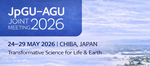
Dates: 24–29 May 2026 Location: Chiba, Japan Abstract Submission Deadline: 17 February 2026 (17:00 JST) This year's JpGU-AGU Joint Meeting has the theme "Transformative Science for Life & Earth", and reflects the urgent need to connect deep scientific enquiry with planetary stewardship,
and to reimagine how science and society can work together. The JpGU session A-HW38, Global Flooding in a Changing World: Trends, Drivers, and Major Open Questions, is relevant to the GEWEX community. The session's core focus is enhancing global resilience by leveraging innovative datasets, AI, and improved attribution to close critical data gaps. Contributions are invited that help predict and mitigate flood impacts in an increasingly uncertain
climate. |
|
|
|
Dates: 1–9 August 2026
Location: Florence, Italy
Abstract Submission Deadline: 13 February 2026 The theme of COSPAR 2026, “Sustainable Space Research for the Planet”, underscores the collective responsibility to pursue scientific advancement with a deep awareness of our environmental impact.
Approximately 150 meetings will cover the fields of COSPAR Scientific Commissions, Panels, and Task Groups, including “The Earth’s Surface, Meteorology and Climate”. |
|
|
|
Dates: 22-23 April 2026 Location: Copenhagen, Denmark Abstract Submission Deadline: 15 March 2026 Assessments of data records related to the global energy and water cycles are an integral part of GEWEX activities over the last few decades. The GEWEX Water Vapor Assessment (G-VAP) attempts to quantify
the state-of-the-art in water vapor products designed for climate applications and support the GEWEX Data and Analysis Panel (GDAP)'s process for selecting water vapor products. One of the main objectives of the 9th G-VAP Workshop is to provide an opportunity for the community to meet after some time apart. Other goals include: - Discussing the latest results from analysis of atmospheric water vapor and its role in the climate system
- Finalizing the
World Climate Research Program (WCRP) report on G-VAP results
- Discussing and planning the future of G-VAP
- Liaising with related initiatives and projects
In order to participate in the 9th G-VAP workshop, please register at the latest by 31 March 2026. |
|
|
|
Dates: 9–12 February 2026
Location: Wellington, New Zealand For the 30th anniversary of the Climate and Cryosphere (CLiC) project, this Open Science Conference will contribute to the UN Decade of Action for Cryospheric Sciences (2025–2034) and prepare the community for the 5th International Polar Year
(2032–2033) with a diverse and cross-discipline town hall meeting. This conference will focus on themes related to The Changing Cryosphere: Science, Impacts, and Adaptation. |
|
|
|
Dates: 23–27 February, 2026
Location: Buenos Aires, Argentina Forecasts on sub-seasonal to inter-decadal timescales have a diverse range of applications in climate services, including disaster preparedness, and short- mid- and long-term planning. However, the complexity of methods, uncertainty assessment, and
ways to merge forecasts across timescales presents a significant knowledge and skill gap. The Summer School on Climate Prediction Across Timescales aims to address these gaps and is designed for early-career researchers and advanced students interested in the science and application of climate predictions. The school will offer foundational and advanced lectures in the mornings and interactive, hands-on lab sessions in the afternoons. |
|
|
|
Dates: 23–27 March 2026
Location: Bonn, Germany By Invitation Only The 38th annual GEWEX Scientific Steering Group (SSG-38) meeting is hosted by the European Centre
for Medium-Range Weather Forecasts (ECMWF) and Copernicus, the Earth observation component of the European Union’s Space program. GEWEX SSG-38 will focus on internal matters: the new GEWEX Science Plan for GEWEX’s Phase IV (2022–2032), how that translates to current and future panel
activities, and how it aligns and links with WCRP’s science priorities. Each GEWEX Panel will report on their activities in 2025 and future plans. This meeting will also focus on GEWEX activities in relation to our sponsors and international partners. The program will be completed with presentations from the other WCRP core projects, Lighthouse Activities, space agencies, and other relevant international programs. |
|
|
|
Dates: August 4–6, 2026 Location: Boulder, Colorado This meeting is a follow-on to the 2025 summer workshop and will focus on the role of land–atmosphere interactions in predictability at subseasonal-to-seasonal (S2S) timescales (here defined as two weeks to three months). The workshop will bring together
researchers, modelers, and practitioners working on: - Process-oriented metrics for evaluating land–atmosphere interactions in S2S models
- Application-oriented metrics to assess user-relevant aspects of S2S prediction
- Experimental protocols for coordinated S2S land–atmosphere experiments
- Demonstrations and early results applying these metrics and protocols in S2S modeling systems
- Community regionally refined
simulations
- Applications of S2S forecasts to agriculture, water resources, wildfire, heatwave, extreme rainfall, and more
The program will include a mix of science and applications talks, working-group showcases, discussion of coordinated experiments, and planning for future community efforts. Innovative, forward-looking applications of S2S forecasts, uncertainty quantification, and decision-support tools are also encouraged. The workshop will be hybrid, with
talks live-streamed for virtual attendees (however, in-person participation is strongly encouraged). |
|
To advertise a career or training opportunity, please send us an email.
Location: University of Arizona, Tucson, AZ, USA
Application Deadline: Review of applications begins late February 2026 The Department of Hydrology and Atmospheric Sciences (HAS) at the University of Arizona (UA) invites applications for an open-rank, tenure-track faculty position in Radar Meteorology (broadly defined) to begin
August 2026. HAS seeks areas of research and teaching that contribute to the advancement of process-level understanding of storm systems (e.g., mesoscale convective systems, monsoon convection, atmospheric rivers) and extreme weather, combining observations (particularly radar), modeling, and analysis. Areas of interest may include, but are not limited to: ground-based measurements using radars and other instruments, connection of these measurements to spaceborne measurements, kilometer-scale
modeling of storm systems and extreme weather, and innovative use of AI/ML for observational data analysis and modeling. |
Location: PNNL, Richland, Washington Application Deadline: 8 February 2026 The Atmospheric Radiation Measurement (ARM) User Facility (www.arm.gov), one of the world’s premier atmospheric research facilities, seeks a new
Director. The ARM Director reports to the Associate Laboratory Director for Earth and Biological Sciences at Pacific Northwest National Laboratory (PNNL) and provides overall scientific leadership, strategic direction, and operational oversight for the ARM enterprise, which spans a consortium of nine Department of Energy National Laboratories. The Director guides scientific priorities; leads complex operations across multiple observatories and platforms (ground-,
mobile-, and aerial-based); stewards data quality and critical infrastructure; and collaborates closely with DOE, other DOE user facilities, national laboratories, academic institutions, and the broader scientific community. This role requires strong scientific credibility, a forward-looking scientific vision, and demonstrated organizational leadership and management acumen to advance ARM’s mission, ensure sustainable operations, and deliver high-impact science and capabilities. |
Location: University of Oxford, UK Application Deadline: 30 January 2026 Applications are invited for a Postdoctoral researcher in convection and aerosol research with satellite based remote sensing. This position will advance our understanding convective systems under climate and air pollution
changes. The focus will be on convection, aerosols, and their interactions, utilizing satellite-based remote sensing. Potential areas of emphasis include cloud tracking and the analysis of data from the innovative EarthCARE satellite mission in combination with global km-scale models. Successful applicants will work closely with national and international collaborators and are expected to develop innovative research approaches. The post-holder will have the opportunity
to teach. |
|
|
Dates: 22–26 June 2026 Location: Vienna, Austria Application Deadline: 1 May 2026 This summer school is devoted to runoff prediction in ungauged basins (PUB), i.e., predicting water runoff at locations where no runoff data are available. This lack of data presents considerable challenges to catchment
managers who require information on water flows for decision making. This course will provide hydrologists with the theory and methods to address this critical challenge. Masters and Ph.D. students researching catchment hydrology and practicing hydrologists who are challenged by making predictions in the absence of runoff data are invited to apply. |
|
|
|
|
|
|
|
|
|
|
|